Skip to content

How Disgruntled Beneficiaries Might attack an Estate Freeze

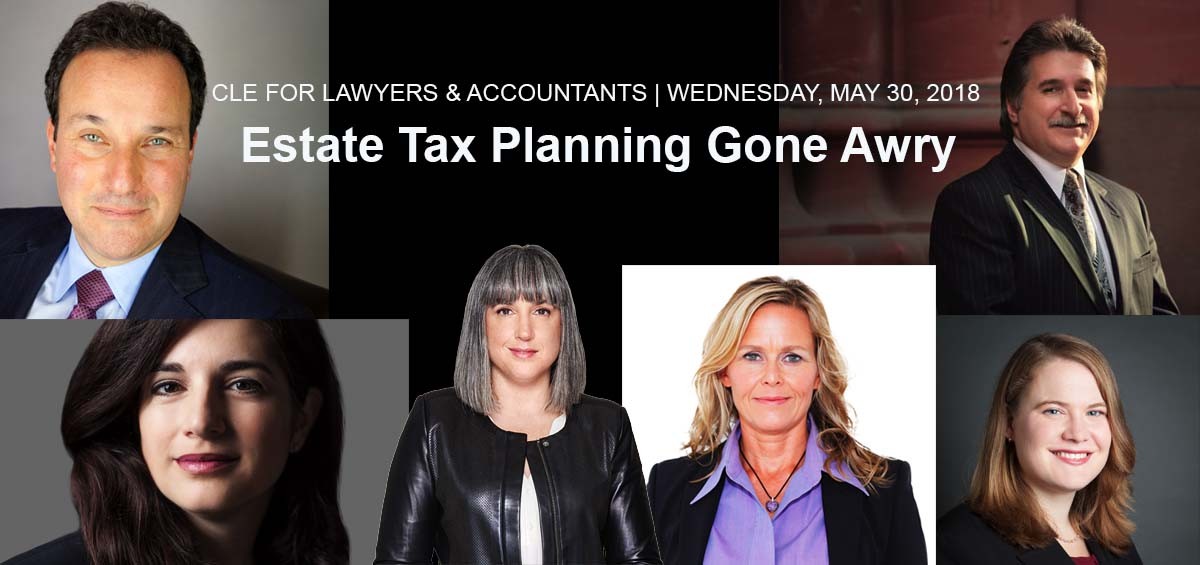
There is an interesting piece in this week’s CJN. It is about the CLE B’Nai Brith Seminar on May 30, 2018, and features prominent accountants and lawyers who are presenters at this seminar. They are Clare Burns, Craig Vander Zee, Jonathan Hames, Jordan Atin, Melanie Yach, Nikolay Chserbinin and our own Brendan Donovan.

Read more

When the housing market drops, it is not for the faint of heart

Douglas and Shila Gamoff listed their home for sale for $2,000,000. They had 18 showings leading to a bidding war. The prospect of competing against multiple offers prompted Yixing Hu and David Lea to make an offer to buy the house for $2,250,000. Their offer was accepted. But sometime after signing the agreement of purchase and sale, the purchasers had buyers’ remorse. David Lea pleaded with the vendors to let him out of the deal. The buyers felt they overpaid.

Read more
limitation period

POA Compensation and Limitation Periods

One might expect that an attorney for property would have to pursue unpaid compensation that s/he may be entitled to within 2 years or the incapable person or his estate would a limitation period defence against the claim. Let’s see what the Court of Appeal for Ontario had to say on this issue in Armitage v. Salvation Army.

Read more
notice of objection

What is the minimal evidentiary threshold in Will Challenges?

The current system allows anyone who appears to have a financial interest in an estate to challenge a will for minimal costs by giving notice of their objection. All that is required is the filing of a one page document called a “notice of objection”. This is often a boiler plate document alleging that the will-maker did not have capacity, did not know or approve of the contents of a will or was unduly influenced. At this stage, no evidence has to be provided and the application for probate will be temporarily derailed.

Read more
court costs

Liability for Legal Fees in Estate Matters

It is said that there are two certainties in life: death and taxes. For those involved in litigation, there is a third: legal fees. Who should bear the often-exorbitant cost of these fees at the conclusion of litigation? Although legal costs have traditionally been paid out of the Estate, modern Ontario courts follow the “loser pays” rule in estates matters. A recent ruling from the Court of Appeal for Ontario[1. Welton Estate v. Haugrud, 2017 ONCA 831] demonstrates that the court has flexibility even when operating within this rule. Specifically, the court can apportion costs between the litigants in a way that respects the importance of giving effect to valid wills while also discouraging parties from taking unreasonable positions.

Read more
revoke will

Lost Wills and the Presumption of Revocation

In Ontario a person is entitled to change his/her mind and revoke his/her will. There are a number of ways to revoke a Will. One such way is for the testator to burn, tear up or otherwise destroy it or by having some other person do so in his or her presence and by his or her direction with the intention of revoking the Will. But, sometimes there is no witness or proof that any such destruction took place. That begs the question - what happens if after the testator dies no one can find the Will and no one has knowledge that it was destroyed?

Read more

Mediation and the Deemed Disposition

Experienced lawyers prepare for mediation by exploring how estate assets can be divided on a tax efficient basis. Why? Because as a general rule, the bigger the net amount of the estate the better chance at achieving a settlement as there is more money to divide between the litigants. Woe unto the lawyer who advises a client to accept a settlement without advising the net amount to be received after deduction of tax. That is why people who specialize in tax are often consulted prior to mediation.

Read more
Back To Top